
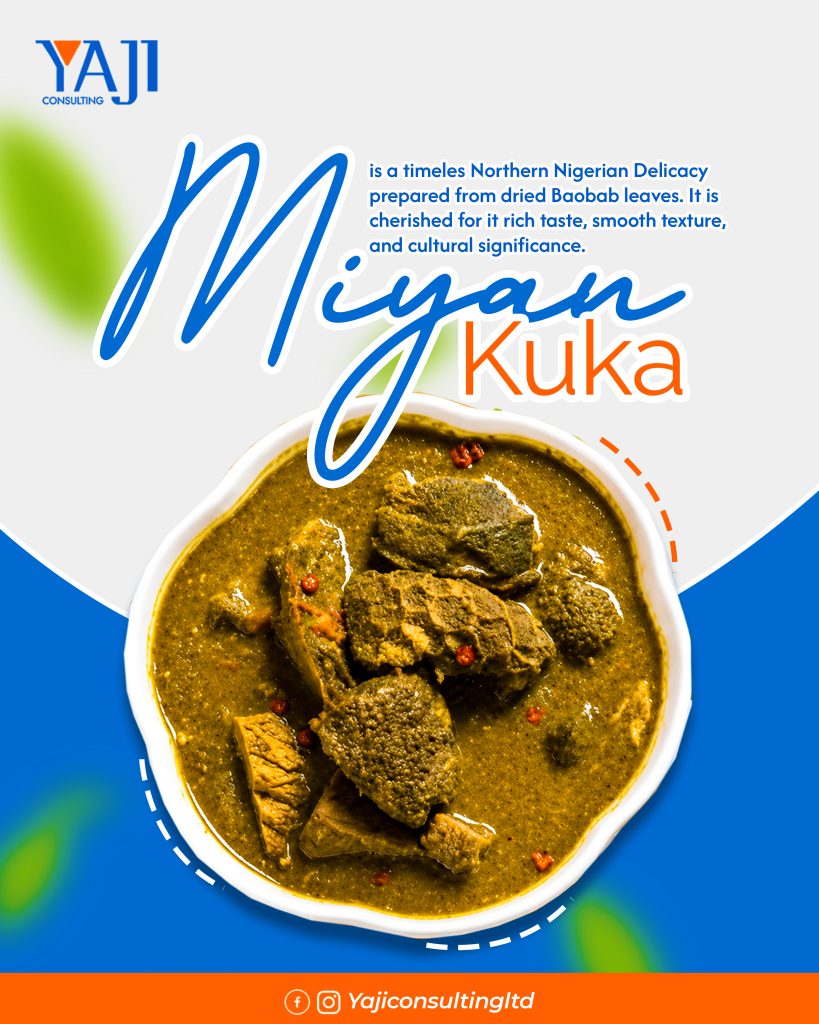
Food has a remarkable way of telling stories. It connects generations, preserves traditions, and gives us a taste of where we come from. Across Northern Nigeria, few dishes capture this connection quite like Miyan Kuka.
Cooks prepare this traditional soup with dried and powdered baobab leaves. It has a distinctive green colour, smooth texture, and earthy flavour. People commonly enjoy it with different varieties of tuwo, making it an important part of Northern Nigerian food culture.
At YAJI Consulting, we believe that exploring traditional foods helps us understand the people, places, and stories that shape our cultural identity.
What Is Miyan Kuka?
In Hausa, miyan means “soup,” while kuka refers to the baobab leaves that cooks use to prepare the dish.
Traditionally, cooks dry the leaves and grind them into a fine powder before adding them to a seasoned soup base. Depending on the household or community, cooks may also add meat, fish, pepper, spices, palm oil, and other ingredients.
As a result, individual preparations can have their own distinctive taste and texture while still retaining the familiar character of this Northern delicacy.
The Baobab Tree Behind the Dish
At the heart of this traditional soup stands the baobab tree, scientifically known as Adansonia digitata.
Communities across different parts of Africa have valued the baobab tree for generations. People use various parts of the tree for food and other purposes, while communities in Northern Nigeria particularly value its leaves for traditional dishes.
Therefore, the dish reflects more than culinary creativity. It also demonstrates how communities have traditionally used resources available within their environment.
From Baobab Leaves to the Kitchen
The journey from the baobab tree to the dinner table shows how communities preserve traditional knowledge.
People harvest, dry, and process the leaves into powder before adding them to meals. This simple process demonstrates how local ingredients can become an important part of a community’s culinary identity.
Miyan Kuka and Northern Nigerian Food Culture
Northern Nigerian cuisine reflects the region’s history, environment, agriculture, trade, and cultural diversity.
Within this rich culinary landscape, Miyan Kuka holds a special place. The soup has strong connections to Hausa cuisine, and people enjoy it across different parts of Northern Nigeria.
People commonly serve it with varieties of tuwo, including tuwo shinkafa, tuwo masara, and tuwo dawa. Together, these foods create a familiar meal that families enjoy in homes, gatherings, and other social settings.
More importantly, the dish expresses cultural identity. A meal prepared from familiar local ingredients can evoke memories of home, family, community, and tradition.
How the Traditional Soup Is Prepared
Although recipes vary, cooks generally begin with a seasoned soup base.
Cooks carefully mix powdered baobab leaves into the soup. They may also add meat, fish, pepper, spices, and other ingredients according to personal or family preferences.
The powder gives the soup its characteristic appearance and consistency. Cooks then serve it hot alongside a preferred variety of tuwo.
Because preparation methods differ between families and communities, no single recipe defines the dish. Instead, these variations contribute to the diversity of Nigerian food heritage.
Family Recipes and Culinary Traditions
Families often pass traditional recipes from one generation to another rather than recording them in formal cookbooks.
Consequently, the way families prepare this soup can vary from one home to another. Some families may prefer a particular combination of spices, while others may choose different meats, fish, or seasonings.
These differences represent more than variations in taste. They reflect the personal and communal stories that make food traditions unique.
More Than a Meal: The Cultural Significance
Traditional food often carries memories that a recipe alone cannot capture.
Families connect Miyan Kuka with everyday life, shared meals, hospitality, and cultural identity across Northern Nigeria. The dish also reflects the relationship between food traditions and the natural environment through its use of baobab leaves.
In this way, preserving the dish means preserving knowledge about ingredients, preparation methods, family traditions, and the communities that have carried these practices from one generation to another.
Food, therefore, becomes a living form of heritage.
The Role of Tuwo in the Miyan Kuka Experience
For many people, the meal tastes best alongside tuwo.
People can enjoy the soup with different varieties, including tuwo shinkafa, made from rice, as well as tuwo masara and tuwo dawa.
This combination creates a familiar Northern Nigerian meal and highlights the way different elements of the region’s cuisine complement one another.
Ultimately, the pairing represents more than taste. It reflects a culinary tradition that families have maintained across generations.
Why Miyan Kuka Deserves to Be Celebrated
In a rapidly changing world, younger generations can sometimes overlook traditional foods as they encounter increasingly globalized food cultures.
However, dishes such as Miyan Kuka deserve a place in today’s cultural conversations.
They provide opportunities to teach younger generations about local ingredients, traditional knowledge, regional identity, and the importance of preserving cultural practices.
Furthermore, celebrating traditional cuisine can contribute to cultural tourism by encouraging people to explore the food traditions associated with different communities and destinations.
A dish can become a doorway through which people discover an entire culture.
Preserving Northern Nigeria’s Culinary Heritage
Cultural heritage extends beyond monuments, festivals, clothing, and historical sites.
Food is heritage too.
Traditional dishes can tell us about the environments where communities live, the resources available to them, the techniques families pass down, and the values people attach to sharing meals.
At YAJI Consulting, we believe these everyday expressions of culture deserve documentation, celebration, and wider recognition.
This baobab-leaf soup represents just one of the many culinary traditions that make Northern Nigeria’s cultural landscape so rich and diverse.
Miyan Kuka: A Taste of Heritage
At its heart, Miyan Kuka represents more than a Northern Nigerian soup made from baobab leaves. It offers a taste of tradition, identity, and cultural memory.
From the baobab tree to the family kitchen and, ultimately, the plate of tuwo and soup, every stage of its story reflects a connection between people, place, and heritage. https://www.baobabfoods.com/science-library/baobab-tree-uses-indigenous-tradition/
By celebrating traditional foods, we celebrate the people, knowledge, and communities behind them.
At YAJI Consulting, we remain committed to telling these stories and shining a light on the cultural treasures that make Northern Nigeria unique.
Because sometimes, the best way to understand a culture is to start with what is on its plate. About Us
#fyp #explorepage #viral