
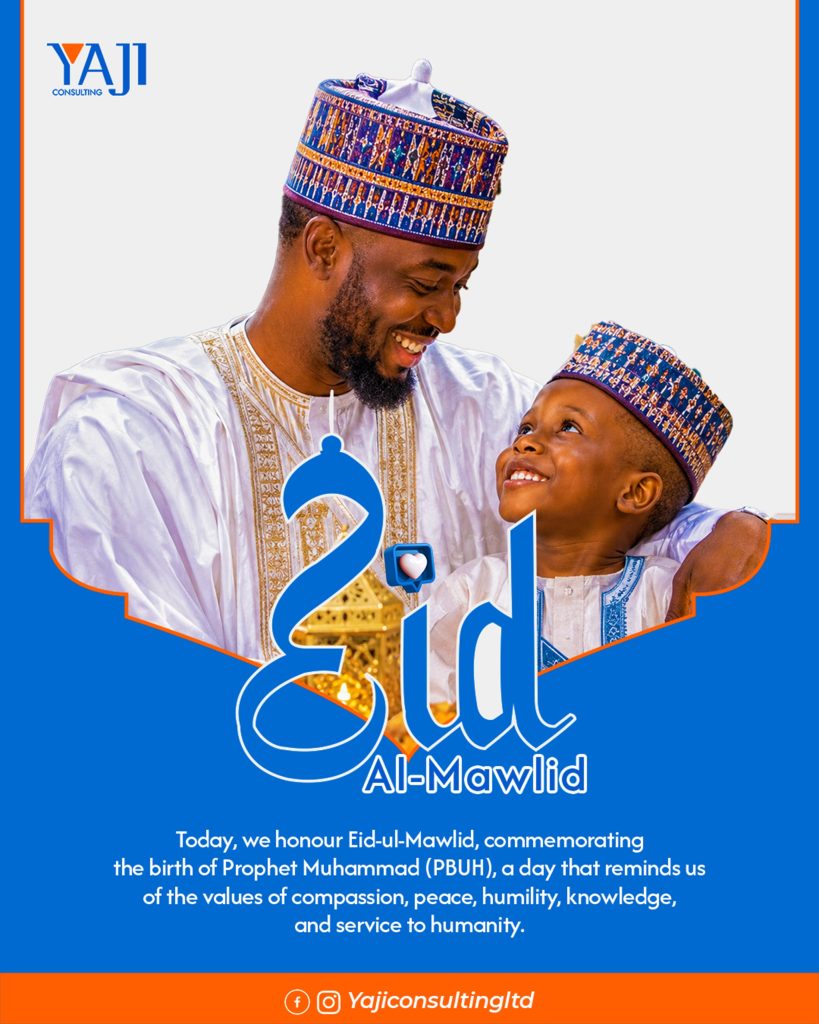
Eid-ul-Mawlid is an important occasion for Muslims around the world, commemorating the birth of Prophet Muhammad (PBUH). In Nigeria, the occasion also reflects the country’s rich religious and cultural heritage.
Across communities, Muslims mark the occasion through prayers, religious gatherings, lectures, recitations, acts of charity, and family celebrations. These traditions create opportunities for reflection while bringing people together.
In 2026, the Federal Government of Nigeria declared Tuesday, 25 August 2026, a public holiday to commemorate Eid-ul-Mawlid. The Minister of Interior also encouraged Nigerians to reflect on values such as compassion, humility, service, peace, and national unity.
At YAJI Consulting, we believe that occasions like this offer an opportunity to explore the relationship between faith, culture, community, and heritage.
What Is Eid-ul-Mawlid?
Eid-ul-Mawlid, also known as Mawlid an-Nabi, commemorates the birth of Prophet Muhammad (PBUH).
For many Muslims, the occasion provides an opportunity to reflect on his life, character, and teachings. Values such as compassion, humility, patience, honesty, generosity, and service to others remain central to these reflections.
However, communities observe Mawlid in different ways. Some organize religious lectures and recitations, while others gather for prayers, communal meals, charitable activities, and other forms of remembrance.
Therefore, the celebration can take different forms while maintaining its central focus on faith and reflection.
The Meaning and Significance of Eid-ul-Mawlid
The significance of Mawlid extends beyond the celebration itself.
For many Muslims, the occasion encourages a deeper reflection on the qualities associated with the Prophet’s life. Compassion, kindness, justice, humility, and concern for others can provide meaningful lessons for individuals and communities.
Furthermore, the occasion creates an opportunity for people to strengthen relationships.
Families come together. Communities gather. People share meals and extend generosity to others. Consequently, the celebration can reinforce values that encourage peaceful and respectful communities.
Compassion in the Mawlid Celebration
Nigeria has a long and diverse history of Islamic traditions.
Across Northern Nigeria in particular, Islam has influenced scholarship, education, leadership, architecture, literature, clothing, festivals, and community life for centuries.
Mawlid therefore forms part of a wider cultural landscape. Communities have developed their own ways of marking religious occasions, often combining religious practices with local languages, traditional clothing, food, and communal customs.
These expressions demonstrate the diversity within Nigerian Muslim communities.
More importantly, they show how traditions can evolve while maintaining connections to their historical and spiritual roots.
How Nigerian Communities Mark Mawlid
Mawlid celebrations vary from one community to another.
In some places, religious scholars lead lectures and discussions about the life and teachings of Prophet Muhammad (PBUH). Elsewhere, communities organize recitations, prayers, processions, or gatherings.
Families may also prepare food and invite relatives, friends, and neighbours to share meals.
Charity and generosity can also form an important part of the occasion. Individuals and organizations may use the period to support people who need assistance.
As a result, the celebration can bring together faith, community, hospitality, and social responsibility.
Mawlid, Knowledge and Islamic Scholarship
Knowledge has played an important role in Islamic traditions for centuries.
This connection becomes particularly significant when we consider Northern Nigeria’s history of Islamic scholarship. The region produced influential scholars, writers, teachers, and institutions that contributed to the spread of Islamic learning across West Africa.
Mawlid gatherings can continue this tradition by creating spaces for teaching, discussion, reflection, and learning.
In this sense, the occasion connects contemporary communities with a much longer history of scholarship and intellectual development.
The Values We Can Learn From Mawlid
The celebration also provides an opportunity to reflect on values that remain relevant in modern society.
Compassion and Kindness
Compassion encourages people to recognise the needs of others and respond with kindness.
Humility and Good Character
Humility reminds leaders and individuals that influence comes with responsibility. Good character also strengthens trust within families and communities.
Knowledge and Learning
Education helps communities develop. By encouraging learning, communities can equip younger generations with the knowledge they need to contribute positively to society.
Generosity and Service
Acts of generosity can strengthen relationships and provide support for people facing difficult circumstances.
Peace and Unity
Nigeria’s diversity makes peaceful coexistence especially important. Respect, understanding, and dialogue can help communities build stronger relationships.
Religious Celebrations as Cultural Heritage
Heritage goes beyond historic buildings and monuments.
It also includes the traditions, knowledge, practices, stories, and values that communities pass from one generation to another.
UNESCO describes intangible cultural heritage as practices, expressions, knowledge, and skills that communities recognise as part of their cultural heritage.
Religious celebrations can therefore contribute to a community’s cultural identity. The ways people gather, dress, cook, communicate, teach, and celebrate can all tell important stories about their heritage.
Mawlid offers one example of this relationship between faith and cultural expression.
Preserving Nigeria’s Islamic Heritage
As societies change, some traditional practices can gradually disappear when younger generations lose connection with them.
That is why documentation and storytelling matter.
Recording the history and contemporary expressions of religious and cultural traditions can help younger Nigerians understand the experiences that shaped their communities.
Preservation does not mean refusing change. Instead, it means ensuring that important stories and traditions remain accessible to future generations.
At YAJI Consulting, we believe that this work forms an important part of cultural storytelling.
Faith, Culture and Community
Nigeria’s cultural identity reflects the experiences of many communities.
Religious traditions form an important part of that identity. They influence family life, education, architecture, literature, clothing, food, festivals, and community relationships.
Eid-ul-Mawlid provides an opportunity to appreciate one part of this wider cultural picture.
At the same time, learning about different traditions can encourage greater understanding among Nigerians.
When people understand the histories and practices of different communities, they create more room for respect, dialogue, and peaceful coexistence.
YAJI Consulting and the Preservation of Heritage
At YAJI Consulting, we believe that heritage deserves more than occasional celebration.
It deserves documentation, strategic storytelling, preservation, and thoughtful representation.
From historic figures such as Queen Amina of Zazzau to major Islamic institutions such as the Sokoto Caliphate, Northern Nigeria has stories that continue to shape the region’s identity.
Food traditions such as Miyan Kuka also demonstrate how everyday practices can carry generations of cultural knowledge.
These stories form part of a larger heritage that deserves to be understood, preserved, and shared.Queen Amina of Zazzau: The Warrior Queen Who Redefined Leadership in Northern Nigeria
Celebrating Eid-ul-Mawlid in Nigeria
As Muslims across Nigeria mark Eid-ul-Mawlid, the occasion provides an opportunity to celebrate faith while reflecting on values that strengthen communities.
It is also a moment to appreciate the cultural traditions that have grown around religious life across generations.
Above all, the celebration reminds us of the importance of compassion, humility, knowledge, generosity, peace, and service to humanity.
These values remain relevant regardless of age, background, or community.https://ich.unesco.org/en/what-is-intangible-heritage-00003?utm_source=chatgpt.com
Conclusion: A Legacy Worth Preserving
Eid-ul-Mawlid represents an important part of Islamic religious life and, within Nigeria, forms part of a broader cultural heritage.
Through prayers, learning, family gatherings, charity, food, clothing, and community traditions, people continue to express their faith and pass important values from one generation to another.
As we mark this year’s occasion, may we continue to promote compassion, peaceful coexistence, knowledge, humility, and service to humanity.
At YAJI Consulting, we remain committed to telling the stories that make our heritage meaningful.
Because when we preserve our stories, we preserve the identity of generations to come.
Happy Eid-ul-Mawlid from all of us at YAJI Consulting.
#trending #hashtags #viral