
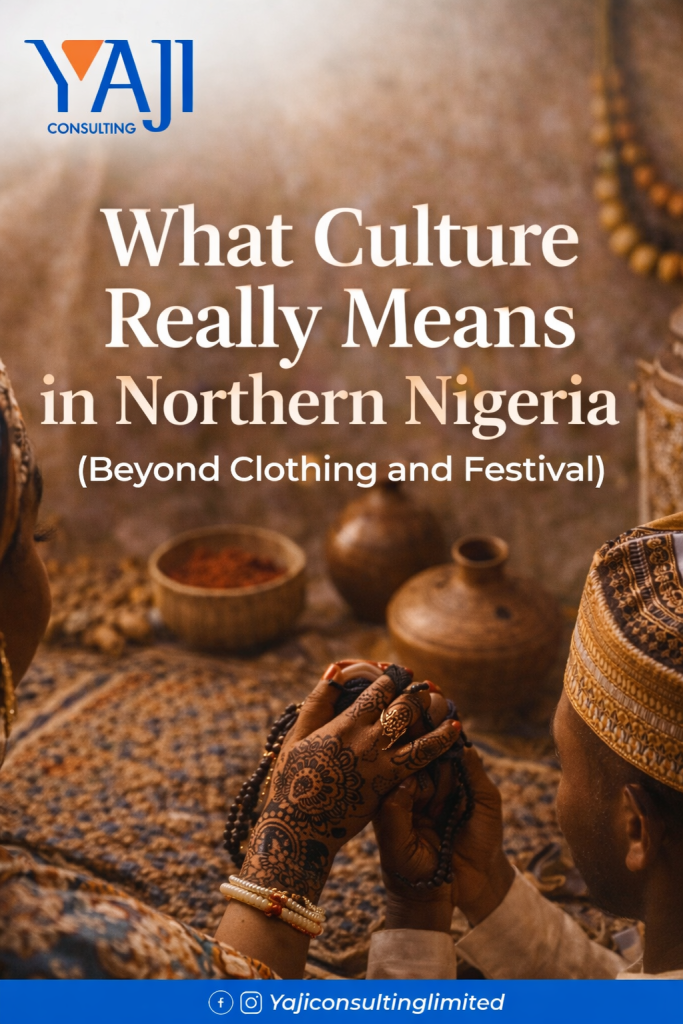
(Beyond Clothing and Festivals)
What Culture Really Means in Northern Nigeria
(Beyond Clothing and Festivals)
When people speak about culture in Northern Nigeria, the conversation often begins and ends with colourful attire, grand festivals, or iconic durbar scenes. While these elements matter, they only scratch the surface. Culture in Northern Nigeria is not a performance. It is a way of life, deeply rooted in values, language, faith, and everyday interactions.
Culture lives in how people greet elders, how communities share responsibility, and how identity passes quietly from one generation to the next. It shapes behaviour, relationships, and worldviews long before it ever appears on a stage or in photographs.
Culture as Values, Not Just Visuals
In Northern Nigeria, culture expresses itself through principles that guide daily living. Respect for elders stands as a cornerstone of social life. Modesty, known through concepts like kunya, influences speech, behaviour, and even personal ambition. These values do not exist for display. People practise them daily in homes, markets, and communal spaces.
Language also plays a powerful role. Proverbs, idioms, and oral storytelling carry wisdom across generations. A single saying can teach patience, courage, or restraint more effectively than long explanations. Through language, culture remains alive and adaptable.http://Wukari International Studies Journal
Faith and Identity Intertwined
Faith shapes cultural expression across much of Northern Nigeria. Religious practices influence daily routines, social norms, and moral expectations. Prayer, fasting, and acts of charity strengthen both personal discipline and community bonds.
Rather than existing separately, faith and culture flow into each other. Together, they define identity and reinforce shared responsibility. This connection explains why cultural values often feel deeply personal and communal at the same time.
Community as the Heart of Culture
Northern Nigerian culture places strong emphasis on community. Individual identity often connects closely to family, lineage, and neighbourhood. People celebrate together, mourn together, and solve problems collectively.
From shared meals to communal ceremonies, these interactions reinforce unity. Culture thrives not because it resists change, but because it adapts while holding on to its core values. Community ensures continuity.
Why This Understanding Matters Today
In a modern world shaped by fast trends and digital influence, culture can easily become reduced to aesthetics. This narrow view risks erasing depth and meaning. Understanding culture as lived experience allows for more respectful storytelling, stronger branding, and more authentic engagement.
At YAJI Consulting, we believe cultural understanding goes beyond visuals. It requires listening, learning, and representing stories with care. True cultural appreciation respects history while engaging the present.
Culture as a Living Legacy
Culture in Northern Nigeria does not exist only in the past. It evolves daily through values, choices, and shared experiences. Clothing and festivals may introduce culture, but values sustain it.
When we look beyond the surface, we see culture as a living legacy. It teaches identity, responsibility, and belonging. And when told truthfully, it continues to inspire generations to come.Contact Us