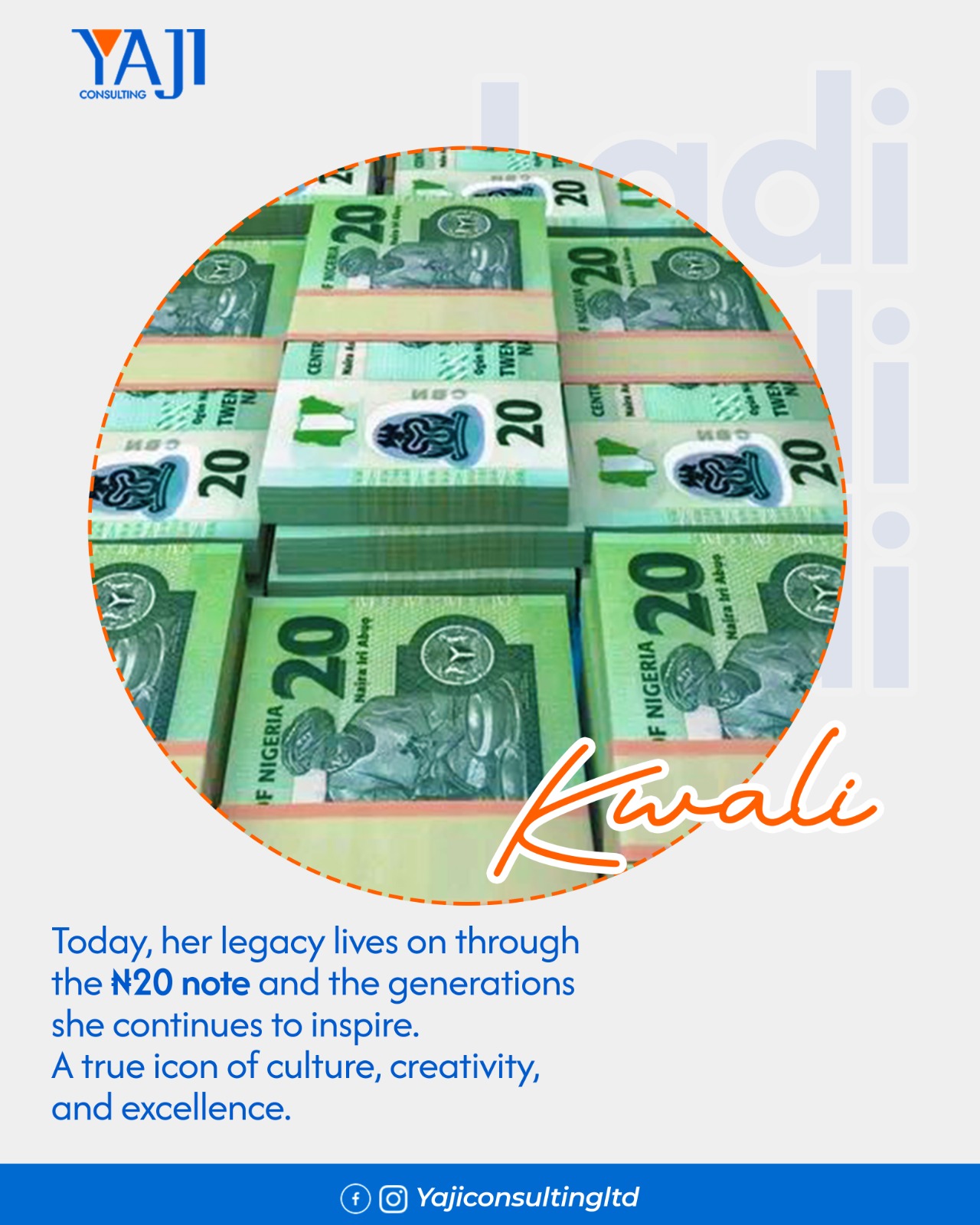
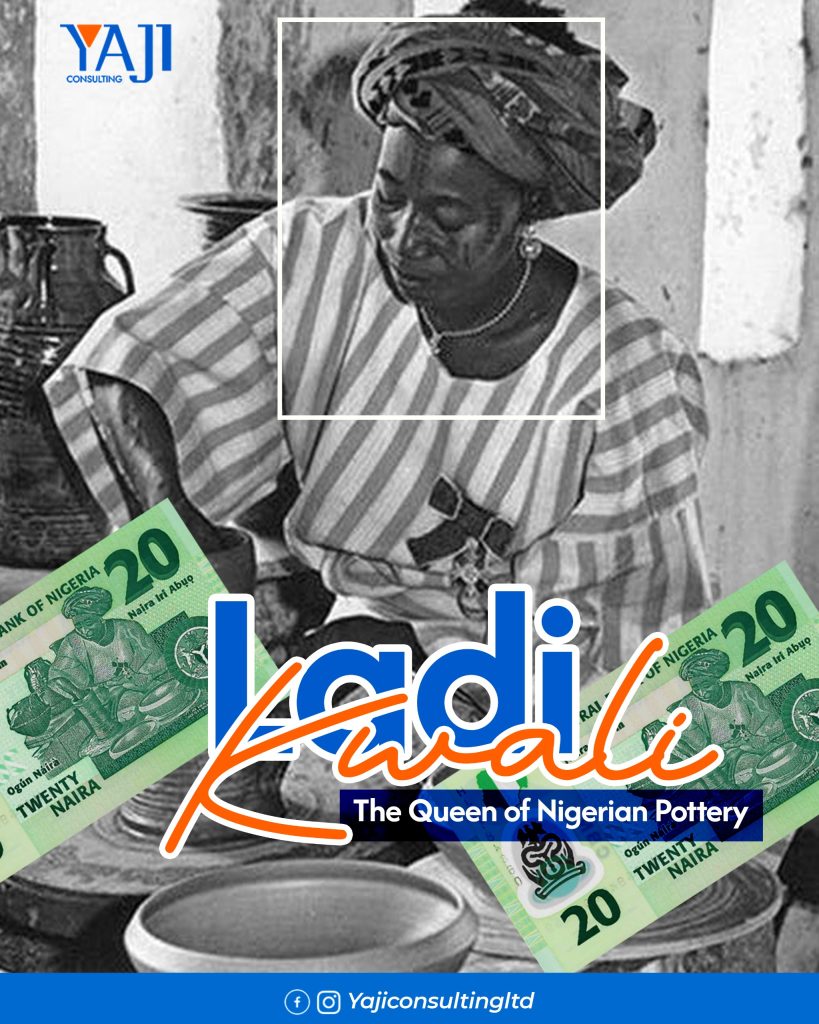
When most Nigerians hold a ₦20 note, they rarely stop to think about the woman whose image appears on it. Yet behind that portrait is one of the most remarkable cultural icons in Nigeria’s history – Ladi Kwali.
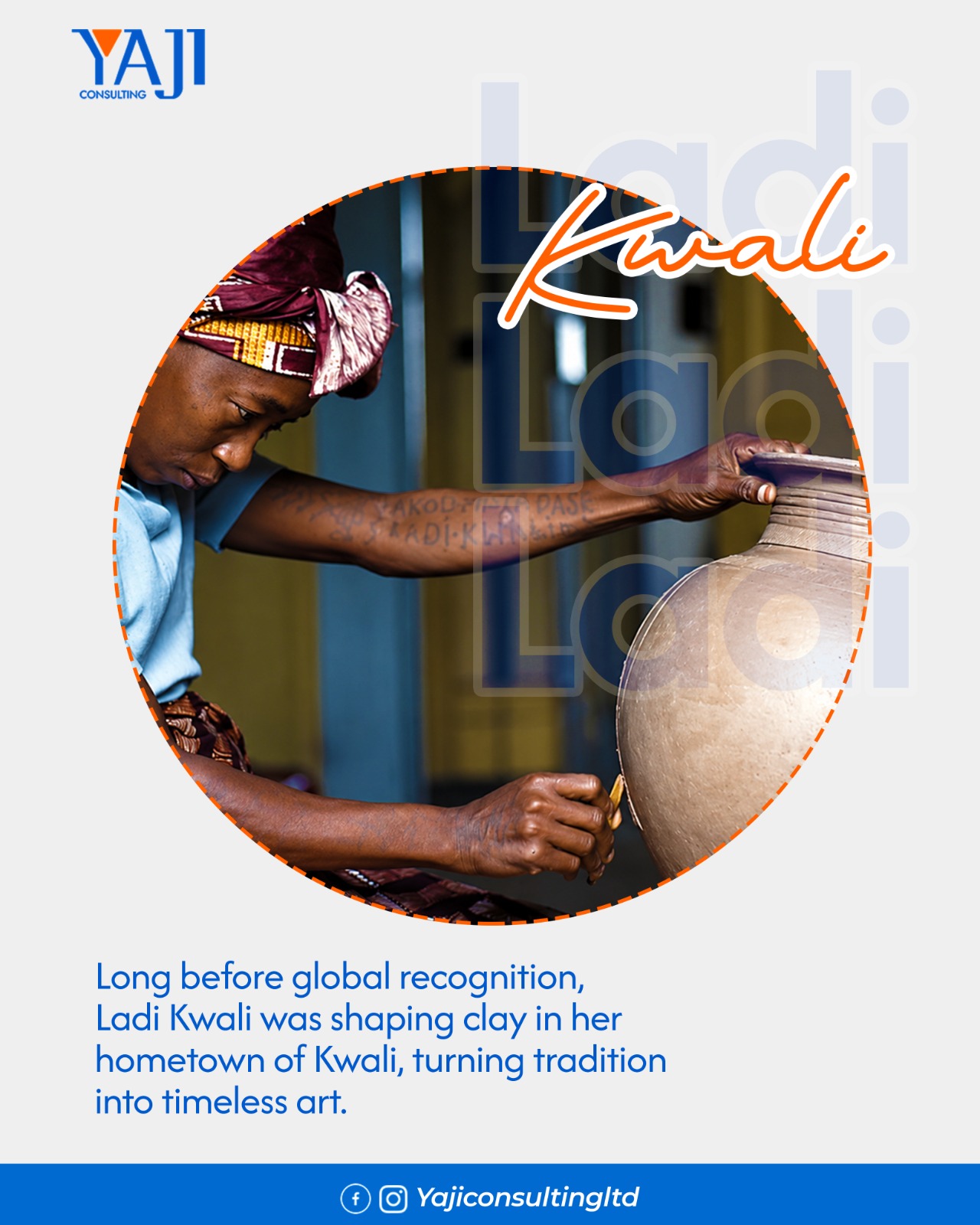
Born around 1925 in Kwali, a Gbagyi community in present-day Abuja, Ladi Kwali grew up in an environment where pottery was more than a craft. It was a way of life. Like many women in her community, she learned the art of pottery from an early age, mastering techniques that had been passed down through generations.
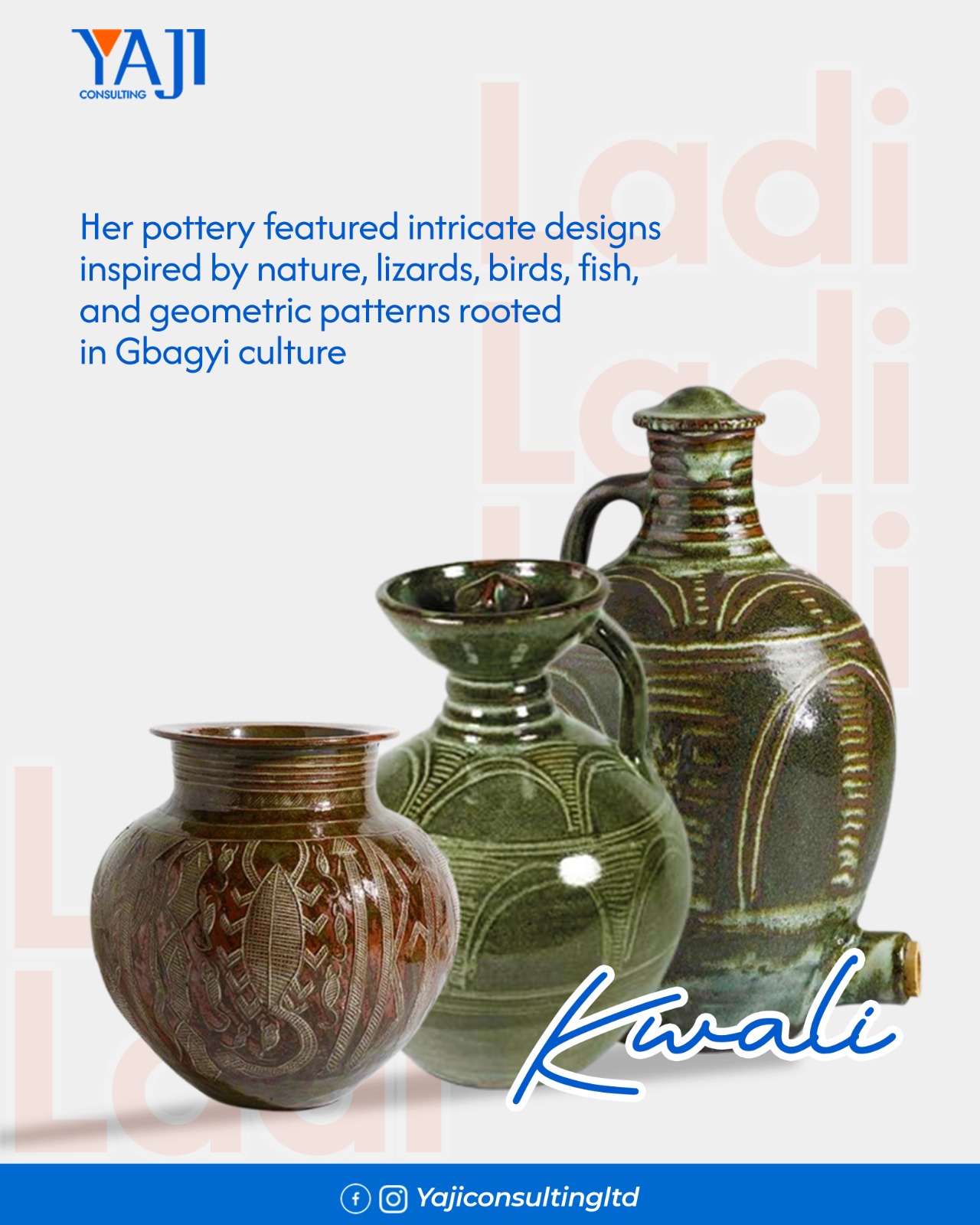
However, Ladi Kwali was no ordinary potter. Her exceptional talent quickly distinguished her from her peers. She created beautifully crafted pots decorated with intricate patterns inspired by nature, including lizards, birds, fish, crocodiles, and geometric designs. Her work reflected both the creativity of the Gbagyi people and the rich cultural heritage of Northern Nigeria.
Ladi Kwali’s Journey from Kwali to Global Recognition
Ladi Kwali’s life changed when her pottery caught the attention of Michael Cardew, a British potter who worked in Nigeria during the 1950s. Impressed by her craftsmanship, he invited her to join the Pottery Training Centre in Suleja.
There, she expanded her skills by learning modern ceramic techniques such as glazing and kiln firing. Instead of abandoning her traditional methods, she blended them with contemporary practices. As a result, she developed a unique style that attracted international attention.
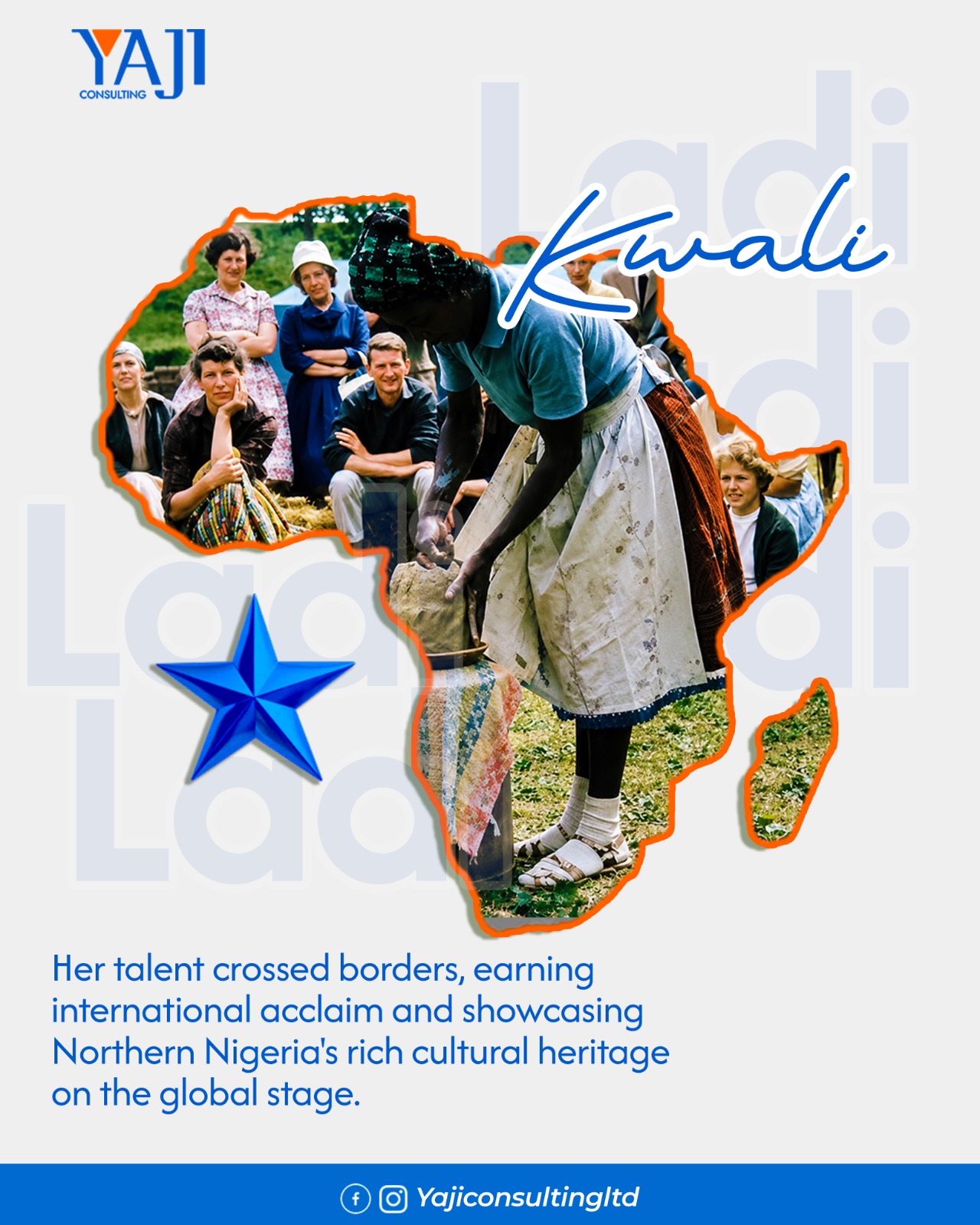
Soon, her work appeared in exhibitions across Europe, America, and other parts of the world. Through her pottery, she introduced global audiences to the artistic excellence of Northern Nigeria.
A Cultural Ambassador for Northern Nigeria
Ladi Kwali became more than an artist. She became a cultural ambassador.
At a time when African craftsmanship received limited global recognition, she demonstrated that indigenous knowledge and traditional skills could compete on the world stage. Her success challenged stereotypes and highlighted the value of African cultural heritage.
Furthermore, her achievements inspired countless women, artists, and cultural practitioners across Nigeria and beyond.
Honours and Legacy
Ladi Kwali’s contributions earned her numerous prestigious honours. She received the Member of the Order of the British Empire (MBE), the Nigerian National Order of Merit (NNOM), and the Officer of the Order of the Niger (OON).
Today, her image appears on the Nigerian ₦20 note, making her one of the few cultural figures to receive such recognition. In addition, major roads, institutions, and cultural centres bear her name.
Her works can also be found in museums and collections around the world, including institutions in Europe and the United States.
Why Ladi Kwali Still Matters Today
Ladi Kwali’s story reminds us that culture is one of our greatest assets. Her journey proves that local traditions can achieve global impact when supported, preserved, and celebrated.
For Northern Nigeria, she remains a symbol of creativity, resilience, and cultural pride. Her life demonstrates the importance of protecting indigenous knowledge while embracing innovation. https://www.si.edu/museums/african-art-museum
At YAJI Consulting, we believe stories like Ladi Kwali’s deserve to be told and retold. They remind us that our heritage is not merely a record of the past. Rather, it is a foundation upon which future generations can build. Leather, Woven in Heritage: The Timeless Craft of Northern Nigeria
As we celebrate Northern culture, Ladi Kwali remains a shining example of how talent, tradition, and determination can leave a lasting mark on the world.